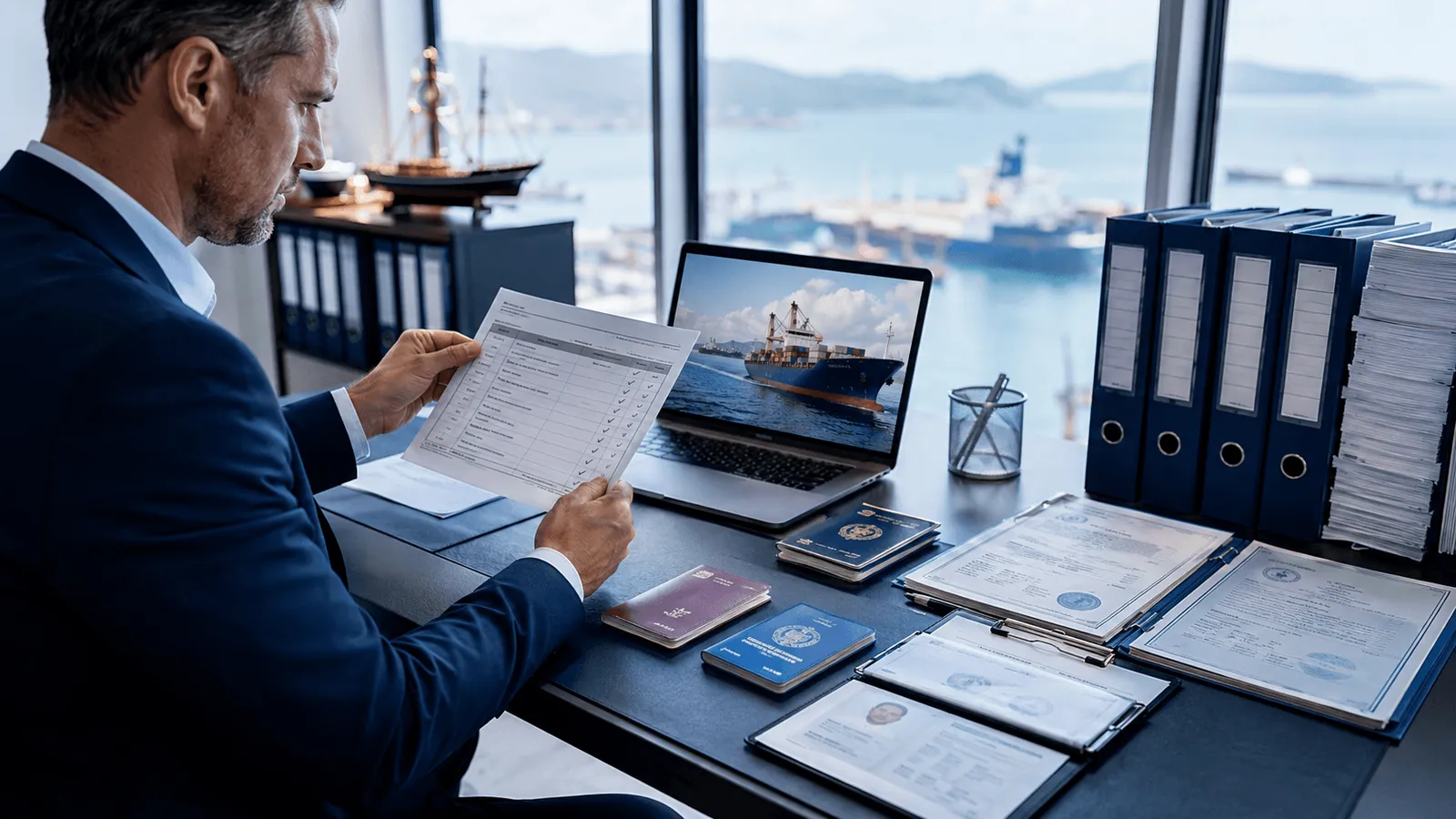
 Ship Crew Agency
Maritime Editorial Team
In This Article
- How Do You Choose a Reliable Crew Manning Agency?
- Why the Right Crew Manning Agency Matters
- Essential Qualities of a Reliable Crew Manning Agency
- Verify International Compliance Before Signing
- Questions Every Ship Owner Should Ask a Manning Agency
- Warning Signs of an Unreliable Crew Manning Agency
- How Reliable Agencies Verify Crew Competence
- Technology That Modern Crew Manning Agencies Should Use
- Cost vs Value When Selecting a Crew Manning Agency
- Why Many International Ship Owners Choose Bangladesh Crew Suppliers
- Crew Manning Agency Selection Checklist
- 1. Licensing and Legal Status
- 2. MLC 2006 Compliance
- 3. STCW and Certification
- 4. Candidate Screening
- 5. Vessel-Type Experience
- 6. Crew Positions Available
- 7. Documentation Control
- 8. Operational Support
- 9. Commercial Transparency
- 10. References and Audit Readiness
- Frequently Asked Questions
- What makes a crew manning agency reliable?
- How do ship owners verify a crew supplier?
- Is MLC compliance mandatory for crew manning agencies?
- What certificates should crew agencies verify?
- Can a manning agency supply officers and ratings?
- How often should crew certificates be checked?
- What is the difference between crew management and recruitment?
- How do agencies reduce PSC risks?
- How do I compare two crew suppliers?
- What questions should I ask before signing a crewing contract?
- What is a crew matrix?
- Why is STCW verification important?
- What are the biggest red flags in crew recruitment?
- Why should shipowners build long-term crew pools?
- What is the best crew manning agency for ship owners?
- Conclusion
Choosing the wrong crew manning agency can become expensive very quickly. A poorly verified officer, a missing endorsement, an expired medical certificate, or a weak pre-joining briefing can create operational delays, failed inspections, crew claims, safety incidents, and reputational damage. In shipping, the cheapest crewing option is rarely the lowest-risk option.
For ship owners, ship managers, technical managers, crewing managers, fleet managers, offshore operators, and maritime procurement teams, crew selection is not just an HR decision. It is a safety, compliance, commercial, and operational continuity decision.
A reliable crew manning agency helps protect the vessel by supplying competent, medically fit, properly documented, and contractually protected seafarers. The agency should understand MLC 2006, STCW, Flag State requirements, Port State Control expectations, crew welfare, documentation control, rotation planning, and vessel-specific competence.
This guide explains how to choose a reliable crew manning agency using practical evaluation criteria, compliance checks, red flags, due diligence questions, comparison tables, and a printable selection checklist. It is written for international ship owners and managers operating across Singapore, Greece, Norway, Germany, Denmark, the Netherlands, Cyprus, the UAE, Japan, South Korea, Hong Kong, Malaysia, India, Bangladesh, the Philippines, the United Kingdom, Canada, and Australia.
How Do You Choose a Reliable Crew Manning Agency?
Choose a reliable crew manning agency by verifying its license, MLC 2006 compliance, STCW verification process, recruitment ethics, candidate screening system, documentation control, crew rotation capability, and client references. The best agency should act as a long-term compliance partner, not only as a quick crew supplier.
A professional crew manning agency should be able to prove that it operates legally, recruits ethically, and supplies competent seafarers for the vessel type you operate. This includes officers, ratings, catering crew, ETOs, cadets, and specialist crew for tankers, LNG carriers, LPG carriers, offshore vessels, container ships, bulk carriers, Ro-Ro vessels, passenger ships, chemical tankers, and general cargo vessels.
The agency should understand the difference between simply filling a vacancy and protecting vessel performance. A last-minute replacement may keep the ship moving, but an unsuitable crew member can create watchkeeping failures, unsafe maintenance practices, fatigue issues, poor bridge communication, weak engine-room discipline, or Port State Control exposure.
A dependable maritime recruitment agency should demonstrate strength in four areas: compliance, competence, continuity, and communication.
Quick checklist for choosing a reliable crew manning agency:
| Evaluation Area | What to Check | Why It Matters |
|---|---|---|
| License and registration | Valid national manning license or recruitment authorization | Confirms legal operation |
| MLC 2006 compliance | Recruitment fee policy, SEA handling, complaint system, welfare process | Protects seafarer rights and shipowner obligations |
| STCW verification | CoC, CoP, endorsements, training certificates, sea service | Reduces competence and certification risk |
| Vessel experience | Tanker, bulk carrier, offshore, container, LNG, LPG, Ro-Ro, passenger | Ensures crew match vessel operations |
| Documentation control | Passport, Seaman Book, CDC, visa, medical, SEA, certificates | Prevents joining delays and PSC issues |
| Crew database | Verified officers and ratings by rank, vessel type, nationality, experience | Improves speed and quality of crew supply |
| 24/7 support | Emergency replacement, travel support, welfare assistance | Protects operational continuity |
| References | Existing shipowner or ship manager feedback | Confirms real performance |
The key is simple: do not choose only by price or promises. Choose by proof.
Why the Right Crew Manning Agency Matters
The right crew manning agency protects vessel safety, operational continuity, compliance, insurance confidence, inspection readiness, and crew retention. A weak agency may create hidden risks through poor screening, fake documents, delayed crew change, unclear contracts, or unsuitable crew for the vessel’s trading pattern and cargo type.
Crew affects almost every risk area on board. The Master’s leadership influences safety culture. The Chief Engineer’s competence affects machinery reliability. Officers manage navigation, cargo, and watchkeeping. Ratings support deck and engine operations. The Cook and Steward influence crew welfare. The ETO protects increasingly digital vessel systems.
When a ship crewing company fails to screen properly, the shipowner pays later. Common consequences include delayed sailing, rejected sign-on, crew disputes, fatigue-related mistakes, off-hire risk, detention exposure, emergency repatriation, poor charterer confidence, and additional travel costs.
Port State Control also makes crew quality visible. A PSC officer may begin with document checks and then examine the ship’s condition, certificates, crew familiarity, and compliance with applicable conventions. Paris MoU guidance notes that a PSC visit normally starts with an examination of documents, followed by a general inspection to verify compliance with convention requirements. (Paris MoU)
The right agency helps reduce these risks by ensuring that every seafarer is properly qualified, medically fit, briefed, documented, and matched to the vessel. For technical managers and fleet managers, this is not “admin.” It is part of the vessel’s risk management system.
A reliable crew management company also improves retention. Stable crew pools reduce repeated onboarding, improve vessel familiarity, and support safer operations. High crew turnover, by contrast, creates constant knowledge loss. Every new joiner needs familiarization, SMS understanding, emergency procedure awareness, and cultural integration with the rest of the crew.
In practical terms, the right agency helps with:
Safer vessel operations
Better crew continuity
Fewer documentation problems
Stronger PSC readiness
Reduced emergency replacement costs
Better welfare and complaint handling
Stronger charterer and insurer confidence
More predictable crew rotation
A good agency does not merely “send crew.” It protects the shipowner’s operational reputation.
Essential Qualities of a Reliable Crew Manning Agency
A reliable crew manning agency should be licensed, transparent, well-audited, digitally organized, ethically operated, and experienced with international crew supply. It should maintain verified candidate records, test competence, check documents, support crew welfare, and provide clear communication before, during, and after deployment.
The strongest agencies combine recruitment capability with maritime compliance knowledge. They know how to source qualified crew, but they also understand the legal and operational consequences of poor crewing decisions.
A certified crew supplier should be able to show documented procedures for candidate selection, interview records, certificate verification, medical screening, reference checks, pre-joining briefing, travel coordination, crew welfare, payroll support, and repatriation.
MLC 2006 is central here. The convention covers seafarer working and living conditions, including employment agreements, wages, hours of work and rest, repatriation, medical care, recruitment and placement services, accommodation, food, health and safety, and complaint procedures. (International Labour Organization)
| Reliable Agency | Unreliable Agency |
|---|---|
| Holds valid license or recruitment authorization | Cannot provide current license |
| Explains MLC 2006 and STCW process clearly | Gives vague compliance answers |
| Verifies CoC, CoP, STCW certificates, endorsements, and sea service | Accepts documents without proper checks |
| Maintains digital crew records and expiry alerts | Uses scattered spreadsheets or informal files |
| Provides transparent pricing and scope | Adds hidden charges later |
| Has vessel-type-specific candidate pools | Sends generic CVs without vessel fit |
| Offers 24/7 operational support | Disappears after crew joining |
| Uses ethical recruitment practices | Charges questionable fees or pressures seafarers |
| Provides references and audit records | Avoids client verification |
| Supports welfare, complaints, and repatriation | Treats crew issues as “not our problem” |
A reliable marine recruitment company should also be comfortable with client audits. If a shipowner asks to review procedures, sample records, compliance workflows, or candidate screening practices, a professional agency should welcome the request. Dodging an audit is usually a smellier sign than a fish hold after three weeks in tropical weather.
Verify International Compliance Before Signing
Before signing with a crew manning agency, verify compliance with MLC 2006, STCW, Flag State requirements, medical standards, drug and alcohol policy, insurance obligations, data protection, crew records, and audit procedures. Compliance should be documented, repeatable, and visible in the agency’s daily recruitment process.
The MLC 2006 and STCW Convention are two of the most important frameworks for evaluating a licensed maritime recruitment agency. STCW establishes international standards for training, certification, and watchkeeping for seafarers. IMO describes STCW as the first convention to establish basic international requirements in these areas. (International Maritime Organization)
MLC 2006 Regulation 1.4 focuses on recruitment and placement. It requires recruitment and placement services to operate under a regulated system and protects seafarers’ employment rights. ILO’s text also addresses the prohibition of recruitment fees borne by seafarers, except limited personal document costs such as national medical certificates, seafarer books, and passports, while visa costs are not treated the same way. (International Labour Organization)
A shipowner should verify that the agency can handle:
Seafarer Employment Agreement preparation and review
Certificate of Competency verification
Certificate of Proficiency verification
STCW certificate checks
Flag State endorsement requirements
Medical certificate validity
Drug and alcohol policy compliance
Passport, visa, CDC, and Seaman Book checks
Sea service verification
Crew matrix preparation
Training matrix updates
Crew welfare and complaint handling
Repatriation planning
Payroll and wage documentation
Pre-joining briefing records
Crew rotation records
Compliance should not rely on verbal assurance. Ask for sample workflows. Ask how certificates are checked. Ask who approves final deployment. Ask how expired documents are flagged. Ask how the agency handles a seafarer complaint.
For tanker operators, offshore operators, and companies exposed to OCIMF or RightShip expectations, crew competence and documentation become even more important. OCIMF’s Tanker Management and Self Assessment is positioned as a best-practice tool for tanker vessel operators seeking high standards of ship management and safety. (OCIMF)
A compliant crew supplier should also understand the difference between Flag State, Port State, class, charterer, and client-specific requirements. One vessel may require additional tanker endorsements. Another may require offshore safety certification. A third may require company-specific familiarization or cargo-related training. The agency must not treat all vessels as identical.
Questions Every Ship Owner Should Ask a Manning Agency
Ship owners should ask a manning agency about licensing, MLC compliance, STCW verification, vessel-type experience, crew screening, documentation control, emergency replacement, welfare, pricing, references, audit readiness, and liability. Strong answers reveal systems; weak answers reveal risk.
Use these questions before signing a crewing contract:
Are you a licensed manning agency or certified crew supplier in your country?
Can you provide your current license, registration, or certification documents?
How do you comply with MLC 2006 Regulation 1.4?
Do you charge any recruitment or placement fees to seafarers?
How do you verify CoC, CoP, STCW certificates, endorsements, and sea service?
Do you verify documents directly with issuing authorities where possible?
What vessel types do you supply crew for most often?
Can you supply officers and ratings for bulk carriers, tankers, container ships, LNG carriers, LPG carriers, offshore vessels, PSV, AHTS, Ro-Ro, and general cargo vessels?
How do you evaluate English communication ability?
Do you conduct technical interviews or simulator assessments?
How do you check references from previous employers or Masters?
What is your process for medical screening and drug and alcohol compliance?
How do you prepare crew before joining?
Do you provide pre-joining briefing on company SMS, ISM Code, safety culture, and vessel-specific requirements?
How do you manage crew rotation and relief planning?
What happens if a seafarer is rejected, misses a flight, fails medical screening, or cannot join?
Do you provide 24/7 emergency support?
Can you provide recent client references?
What is included in your fee, and what is charged separately?
Are you willing to undergo a client compliance audit?
The answers should be specific. “Yes, we handle everything” is not enough. A good answer sounds like a process. A bad answer sounds like a slogan.
Warning Signs of an Unreliable Crew Manning Agency
Warning signs of an unreliable crew manning agency include fake or unchecked certificates, vague licensing, poor communication, no MLC system, unrealistic pricing, high crew turnover, hidden fees, weak references, incomplete records, and pressure to accept candidates quickly without proper verification.
A risky agency often looks attractive at first. The price is low. The response is fast. The CVs arrive quickly. But fast does not always mean competent. Sometimes it means the agency is recycling unverified candidates without proper checks.
Red flags checklist:
| Red Flag | Why It Is Dangerous |
|---|---|
| Cannot show valid license | May be operating illegally or outside proper regulation |
| Offers crew far below market cost | May hide fees, underpay crew, or compromise quality |
| Sends CVs without documents | Suggests weak screening |
| Avoids MLC 2006 questions | Indicates poor compliance knowledge |
| Cannot explain STCW verification | Creates certification risk |
| No references from shipowners | Performance is unproven |
| Poor response time | Emergency support may fail |
| Frequent crew complaints | Indicates welfare or contract issues |
| High replacement rate | Candidate matching may be weak |
| No digital records | Expiry tracking may fail |
| No drug and alcohol policy | Increases operational and safety risk |
| No pre-joining briefing | New crew may be unfamiliar with SMS expectations |
| Hidden charges | Creates procurement and trust problems |
| Pushes urgent approval | May be hiding weak vetting |
| No audit trail | Difficult to defend decisions after an incident |
One of the most serious warning signs is poor document control. Fake or altered certificates, suspicious sea service, mismatched passport names, expired medical certificates, and missing endorsements can create serious operational problems. Once a vessel is delayed or detained, the “cheap” agency becomes very expensive.
Another warning sign is unclear accountability. If the agency cannot explain who is responsible for payroll, SEA execution, complaint handling, repatriation, and emergency replacement, the shipowner may face confusion at the worst possible moment.
How Reliable Agencies Verify Crew Competence
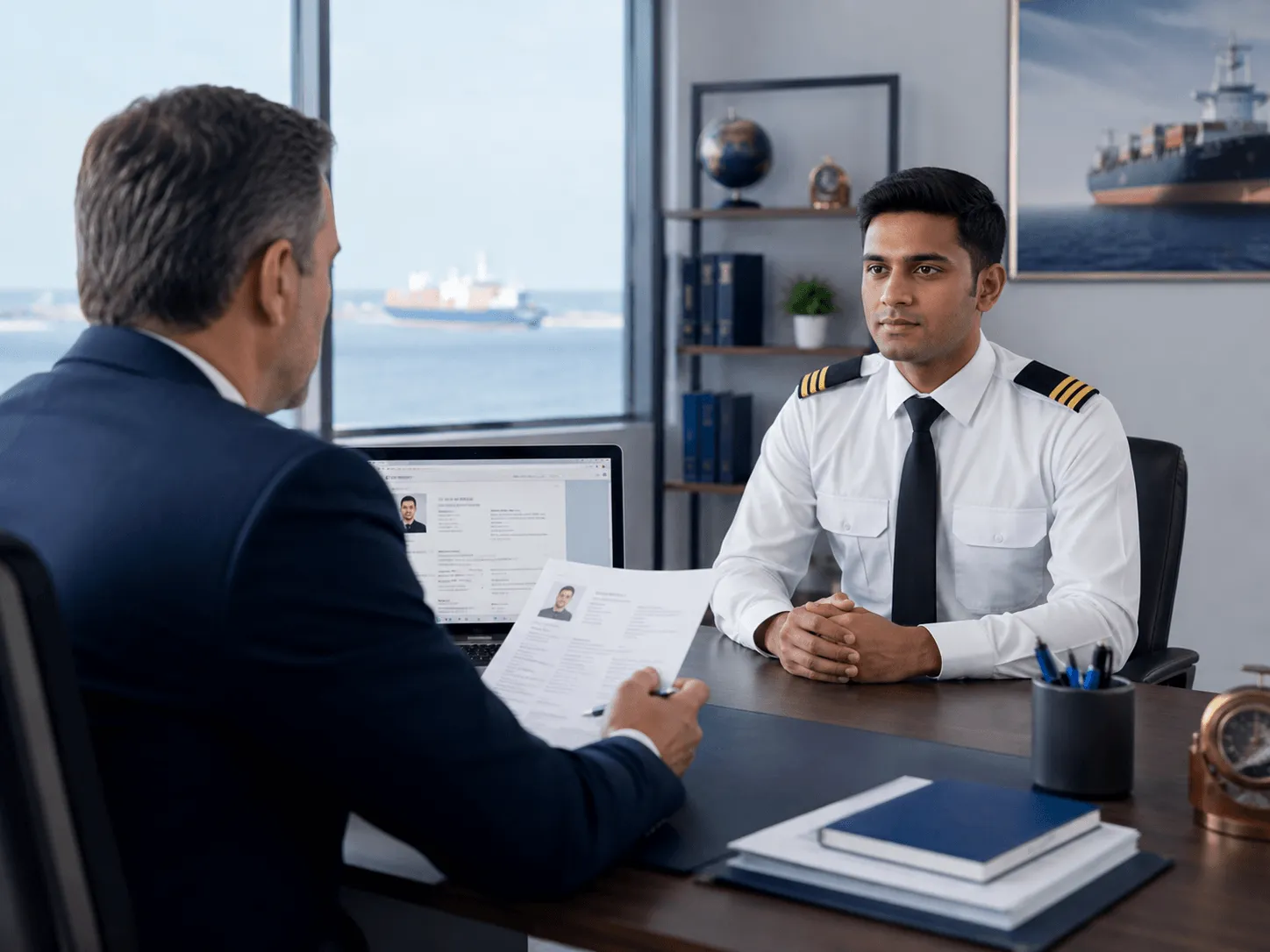
img: Reliable crew manning agency verifying seafarer competence through interviews
Reliable crew manning agencies verify competence through structured interviews, sea service checks, certificate authentication, reference checks, medical screening, English testing, behavioral evaluation, simulator assessments where relevant, and vessel-specific matching. The goal is to confirm that the seafarer can perform safely, not merely hold documents.
A strong agency uses layered verification. It does not rely on one CV, one certificate, or one interview.
For officers, the agency should check rank experience, vessel type, cargo type, trading area, bridge or engine-room systems, previous company feedback, incident history, and leadership ability. For ratings, it should check watchkeeping skills, deck or engine duties, maintenance experience, safety awareness, and communication.
For example, a Chief Officer with chemical tanker experience may not be automatically suitable for an LNG carrier. A Second Engineer from a small general cargo vessel may need further assessment before joining a large container ship or tanker. An ETO should be assessed for automation, high-voltage systems, alarm monitoring, planned maintenance systems, and troubleshooting ability.
Reliable agencies usually assess:
Technical knowledge
Rank-specific competence
STCW compliance
Sea service relevance
Vessel-type experience
English communication
Safety culture
Behavioral reliability
Fatigue awareness
Leadership and teamwork
Emergency response familiarity
Medical fitness
Drug and alcohol compliance
For senior officers, some ship managers request simulator assessments, especially for bridge teams, engine-room management, tanker operations, or dynamic positioning-related roles. Offshore operators may require additional checks for PSV, AHTS, or specialized offshore vessel experience.
Competence verification should also include negative screening. Has the seafarer been involved in serious incidents? Were there disciplinary issues? Did previous employers report poor performance? Were there repeated early sign-offs? A reliable seafarer recruitment agency does not hide uncomfortable information. It helps the shipowner make a properly informed decision.
Technology That Modern Crew Manning Agencies Should Use

img: Digital crew management software for certificate tracking and crew compliance
Modern crew manning agencies should use crew management software, digital records, certificate tracking, compliance dashboards, online recruitment systems, AI-assisted screening, payroll automation, travel management tools, and secure document storage. Technology improves speed, transparency, expiry control, and audit readiness when combined with human maritime expertise.
The maritime industry still has too many crewing teams drowning in spreadsheets. Spreadsheets can help, but they are not enough for serious international crew supply. A modern crew management company should use systems that track every candidate, document, certificate, medical, visa, SEA, training record, crew rotation, and payroll status.
Useful technology includes:
Crew management software
Digital crew profiles
Certificate expiry alerts
Document verification logs
Training matrix dashboards
Crew matrix templates
Online application portals
Interview scoring tools
AI screening support
Secure cloud document storage
Payroll automation
Travel and ticketing coordination
Real-time crew change updates
Compliance audit reports
AI can help shortlist candidates, identify document gaps, detect inconsistencies, and improve response speed. But AI should not replace maritime judgment. A candidate may look strong on paper but still be unsuitable due to communication, temperament, vessel mismatch, or weak safety culture.
Digital documentation is especially important for global clients. Ship owners in Singapore, Greece, Norway, Germany, Denmark, the Netherlands, Cyprus, the UAE, Japan, South Korea, Hong Kong, Malaysia, India, Bangladesh, the Philippines, the UK, Canada, and Australia may all require quick access to records across time zones.
A well-organized agency should be able to provide a clean deployment pack before joining. This may include the seafarer’s CV, certificates, endorsements, passport, Seaman Book, CDC, medical certificate, visa status, SEA, travel plan, pre-joining briefing record, and emergency contact details.
Cost vs Value When Selecting a Crew Manning Agency
When selecting a crew manning agency, compare total value rather than lowest fee. A low-cost agency may create hidden costs through poor retention, documentation errors, emergency replacements, delays, claims, weak welfare handling, or PSC deficiencies. Reliable crewing reduces long-term operational and compliance risk.
Crewing cost is visible. Crewing risk is often hidden. That is why procurement teams should evaluate both price and risk exposure.
A cheaper crew hiring company may appear attractive during negotiation. But if it supplies unfit or poorly matched crew, the shipowner may pay through flight changes, replacement costs, off-hire time, crew claims, management distraction, and reputational harm.
| Low-Cost, Weak Agency | Higher-Value, Reliable Agency |
|---|---|
| Lower initial fee | Transparent service fee |
| Minimal screening | Structured competence verification |
| Weak document control | Digital certificate and expiry tracking |
| Generic candidate pool | Vessel-specific crew matching |
| Poor retention | Stronger crew continuity |
| Limited support | 24/7 crewing assistance |
| Hidden charges | Clear commercial terms |
| Higher risk of delays | Better operational predictability |
| No audit trail | Compliance-ready records |
| Short-term staffing | Long-term crew partnership |
A reliable agency can create value through retention. If a ship crewing company builds a stable pool of Masters, Chief Engineers, officers, ratings, ETOs, cooks, and stewards who understand the client’s SMS, reporting standards, and vessel operations, the owner benefits over time.
Cost evaluation should include:
Recruitment fee
Crew wage structure
Travel cost
Visa and documentation cost
Medical cost
Training cost
Replacement cost
Retention rate
Emergency response capability
Compliance support
Audit readiness
Dispute handling
Welfare support
A good procurement decision should ask: “Which agency reduces our total operating risk?” Not only: “Which agency has the lowest fee?”
Why Many International Ship Owners Choose Bangladesh Crew Suppliers

Img: International crew supply and Bangladesh seafarers for global ship owners
Many international ship owners consider Bangladesh crew suppliers because of maritime training capacity, competitive crewing costs, English communication, availability of officers and ratings, growing global experience, and scalable crew supply. Selection should still be based on agency licensing, document verification, MLC compliance, and vessel-specific competence.
Bangladesh has a long maritime workforce tradition and multiple maritime training institutions. Bangladesh Marine Academy is described as an officer training institute for Merchant Marine cadets, developing marine cadets, officers, and marine engineers for national and foreign-flagged ships engaged in international voyages. (Cadet Admission System)
Bangladesh Maritime Training Institute states that it offers STCW-compliant courses for different grades of Certificate of Competency, and Bangladesh training approvals reference STCW Convention and IMO Model Course requirements. (Bangladesh Maritime Training Institute)
For international owners, Bangladesh can be attractive because of:
Availability of deck and engine personnel
Competitive employment cost compared with some traditional crew markets
English communication ability among many officers
Experience on foreign-going vessels
Supply of officers, ratings, cooks, stewards, cadets, and technical crew
Growing maritime education infrastructure
Potential for long-term crew pool development
Scalability for fleet-wide recruitment
However, shipowners should remain disciplined. Bangladesh is not automatically the right choice unless the agency is compliant, transparent, and technically capable. As with any crew supply market, due diligence is essential. Verify the manning license, certificate checks, medical process, sea service records, references, training matrix, and complaint-handling system.
The best Bangladesh crew suppliers are not just CV brokers. They act as maritime crew providers with proper screening, documentation, travel coordination, welfare support, and long-term retention planning.
Crew Manning Agency Selection Checklist
A crew manning agency selection checklist should cover licensing, MLC 2006 compliance, STCW verification, crew competence, vessel-type experience, documentation, welfare, emergency support, pricing, references, technology, audit readiness, and long-term retention. Use it before approving any agency or signing a crewing contract.
Printable crew management agency checklist:
1. Licensing and Legal Status
Valid national manning license or recruitment registration
Clear company ownership and management structure
Physical office and verified contact details
Compliance with local employment laws
Ability to support international clients
2. MLC 2006 Compliance
Written MLC recruitment and placement procedure
No prohibited recruitment fees charged to seafarers
Seafarer Employment Agreement process
Complaint handling procedure
Welfare support process
Repatriation coordination
Payroll and wage transparency
Record retention policy
3. STCW and Certification
CoC verification
CoP verification
STCW basic and advanced training checks
Flag State endorsement checks
Medical certificate validity
Drug and alcohol compliance
Sea service verification
Training matrix maintenance
4. Candidate Screening
Structured interviews
Rank-specific technical assessment
English communication test
Reference checks
Behavioral evaluation
Previous employer feedback
Vessel-type matching
Senior officer assessment
5. Vessel-Type Experience
Bulk carrier
Tanker
Chemical tanker
LNG carrier
LPG carrier
Container ship
PSV
AHTS
Ro-Ro
Passenger ship
General cargo vessel
6. Crew Positions Available
Master
Chief Officer
Second Officer
Third Officer
Chief Engineer
Second Engineer
Third Engineer
Fourth Engineer
ETO
Bosun
AB
OS
Oiler
Motorman
Cook
Steward
Cadet
7. Documentation Control
Passport
Seaman Book
CDC
Visa
Medical certificate
SEA
STCW certificates
Endorsements
Travel documents
Emergency contact details
Crew matrix
Joining instructions
8. Operational Support
24/7 crewing support
Emergency replacement plan
Travel management
Port agent coordination
Payroll coordination
Family communication support
Sign-on and sign-off updates
9. Commercial Transparency
Clear service fee
Clear replacement terms
No hidden charges
Defined scope of responsibility
Liability and indemnity clauses
Insurance and financial security clarity
Transparent invoicing
10. References and Audit Readiness
Client references
Sample audit records
Compliance procedure documents
Candidate screening records
Certificate verification samples
Crew retention data
Complaint log process
Performance review process
A shipowner should not approve an agency until most of these items are answered clearly and documented properly.
Frequently Asked Questions
What makes a crew manning agency reliable?
A reliable crew manning agency is licensed, compliant with MLC 2006, experienced in STCW verification, transparent in pricing, and capable of supplying competent seafarers for specific vessel types. It should maintain verified crew records, conduct proper interviews, check certificates, support welfare, manage crew rotation, and provide 24/7 operational support.
How do ship owners verify a crew supplier?
Ship owners verify a crew supplier by checking its license, MLC compliance system, client references, certificate verification process, crew database, audit records, emergency support, and commercial terms. They should also review sample crew documentation, recruitment procedures, complaint handling records, and proof of vessel-type experience before signing a contract.
Is MLC compliance mandatory for crew manning agencies?
MLC compliance is essential where the Maritime Labour Convention applies through Flag State or national implementation. MLC 2006 regulates seafarer recruitment and placement, employment agreements, wages, working conditions, repatriation, welfare, and complaint procedures. Shipowners should ensure any agency used meets applicable MLC requirements and national licensing rules.
What certificates should crew agencies verify?
Crew agencies should verify Certificate of Competency, Certificate of Proficiency, STCW certificates, Flag State endorsements, medical certificate, passport, Seaman Book, CDC, visa, tanker endorsements where applicable, sea service records, and any vessel-specific training. Verification should be documented before the seafarer is approved for joining.
Can a manning agency supply officers and ratings?
Yes, a professional manning agency can supply officers and ratings, including Master, Chief Officer, deck officers, Chief Engineer, engineers, ETO, Bosun, AB, OS, Oiler, Motorman, Cook, Steward, and Cadet. The agency should match each rank to the vessel type, trading pattern, cargo operation, and company requirements.
How often should crew certificates be checked?
Crew certificates should be checked before every deployment and monitored continuously through expiry tracking. Medical certificates, STCW training, endorsements, passports, visas, and Seaman Books should be reviewed early enough to avoid last-minute crew change disruption. Reliable agencies use digital alerts to prevent expired documents from reaching the vessel.
What is the difference between crew management and recruitment?
Recruitment focuses on finding and placing seafarers. Crew management is broader and may include rotation planning, payroll, documentation, welfare, travel, training matrix control, performance monitoring, and repatriation. A crew management company usually supports the full employment cycle, while a recruitment agency may only provide candidates.
How do agencies reduce PSC risks?
Agencies reduce PSC risks by supplying properly certificated, medically fit, competent, and briefed crew. They maintain correct documents, verify STCW compliance, prepare crew matrices, ensure valid SEAs, monitor rest-hour awareness, and support safety familiarization. Strong crew documentation and competence reduce the chance of inspection findings linked to manning issues.
How do I compare two crew suppliers?
Compare two crew suppliers by reviewing license status, MLC compliance, vessel-type experience, certificate verification process, candidate quality, response time, replacement policy, references, pricing transparency, digital systems, and retention performance. Do not compare only by fee. The better supplier is the one that reduces operational risk.
What questions should I ask before signing a crewing contract?
Ask about licensing, MLC compliance, STCW verification, vessel experience, recruitment fees, screening methods, medical checks, emergency replacement, crew welfare, payroll, travel management, references, audit readiness, liability, and hidden charges. Clear answers show mature systems. Vague answers suggest weak control.
What is a crew matrix?
A crew matrix is a structured overview of crew qualifications, ranks, certificates, nationality, experience, and vessel-specific requirements. It helps shipowners, managers, charterers, and auditors confirm whether the crew composition meets operational, safety, Flag State, and client requirements. Tanker and offshore clients often review crew matrix details carefully.
Why is STCW verification important?
STCW verification confirms that seafarers meet international training, certification, and watchkeeping standards for their rank and duties. Without proper STCW checks, a vessel may face safety risks, inspection problems, insurance concerns, and operational failures. Verification protects both the shipowner and the crew.
What are the biggest red flags in crew recruitment?
The biggest red flags are fake certificates, no license, hidden fees, poor communication, unrealistic pricing, weak references, missing medical checks, high turnover, no MLC process, and no emergency support. Any agency that pressures shipowners to approve crew without proper documentation should be treated with caution.
Why should shipowners build long-term crew pools?
Long-term crew pools improve retention, vessel familiarity, safety culture, reporting quality, and operational consistency. Returning crew already understand company procedures, vessel equipment, and management expectations. This reduces onboarding time and improves trust between ship, shore, and agency.
What is the best crew manning agency for ship owners?
The best crew manning agency for ship owners is the one that is licensed, compliant, transparent, responsive, technically capable, and experienced with the owner’s vessel types. It should verify documents, assess competence, support welfare, manage crew rotation, and provide reliable long-term crew supply rather than only filling vacancies.
ICS notes that its crewing agency guidelines were produced to help shipping companies choose reputable crewing agencies and ensure seafarers are recruited in line with MLC 2006 requirements. (International Chamber of Shipping) BIMCO also provides standard crew management agreement forms, including CREWMAN A and CREWMAN B, which are useful reference points for structuring crew management relationships. (BIMCO)
Conclusion
Knowing how to choose a reliable crew manning agency is essential for protecting vessel safety, compliance, operational continuity, and long-term crew performance. The best agency is not simply the one that sends CVs fastest or quotes the lowest fee. It is the one that proves its licensing, verifies competence, follows MLC 2006 and STCW requirements, manages documentation properly, supports crew welfare, and responds quickly when operations change.
Ship owners and managers should evaluate every agency through a structured process: license verification, compliance review, certificate checks, candidate screening, vessel-type experience, digital documentation, transparent pricing, references, and audit readiness.
A reliable crew supplier reduces risk before the crew member ever boards the vessel. It helps prevent documentation errors, poor candidate matching, emergency replacement costs, PSC exposure, crew disputes, and avoidable operational delays.
For international ship owners, technical managers, fleet managers, offshore operators, and maritime procurement teams, the right crew manning partner can become a long-term advantage. Strong crew means safer ships, smoother operations, better retention, and stronger commercial confidence.
If you need compliant, reliable, and professionally managed crew solutions for your fleet, contact a trusted crew manning agency that understands international maritime recruitment, MLC 2006 compliance, STCW verification, and vessel-specific crew supply.